


The Importance of Ryan Coogler’s Directing Career So Far
In just over a decade, Ryan Coogler has established himself as one of the most important and influential filmmakers of his generation. With a career that bridges the personal and the political, the intimate and the epic, Coogler’s work has reshaped how Black stories are told in Hollywood — and how the film industry itself approaches authenticity, representation, and community. From his breakout debut Fruitvale Station to his groundbreaking work on Black Panther, Coogler’s directing career is a case study in how vision, empathy, and purpose can coexist within the studio system.
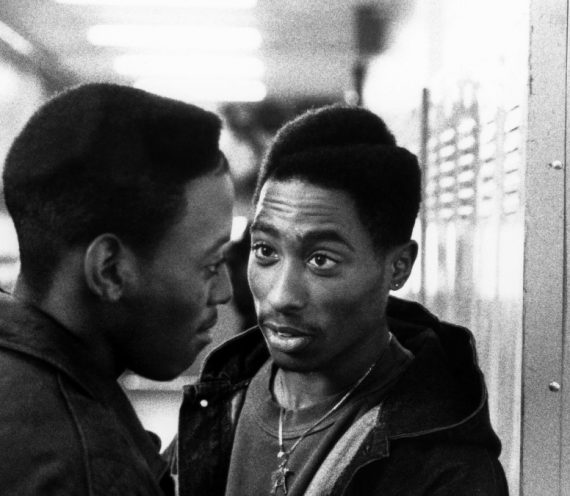
Coogler’s first feature, Fruitvale Station (2013), told the true story of Oscar Grant III, a young Black man killed by police in Oakland, California. The film, deeply human and hauntingly restrained, announced Coogler as a storyteller who could balance art and activism with grace. It also revealed his gift for emotional realism — his ability to find poetry in everyday lives and tragedy in systemic injustice. Fruitvale Station didn’t just win awards; it helped spark a broader conversation about racial violence and accountability in America’s justice system.
Then came Creed (2015), a bold reimagining of the Rocky franchise that transformed what could have been a nostalgia-driven sequel into a meditation on legacy, identity, and perseverance. Coogler elevated Adonis Creed’s story — the son of Apollo Creed — beyond sports drama, creating an emotionally charged film that honored its roots while forging its own path. It was also a testament to his collaboration with Michael B. Jordan, an actor-director partnership that has become one of the defining creative relationships in modern cinema.
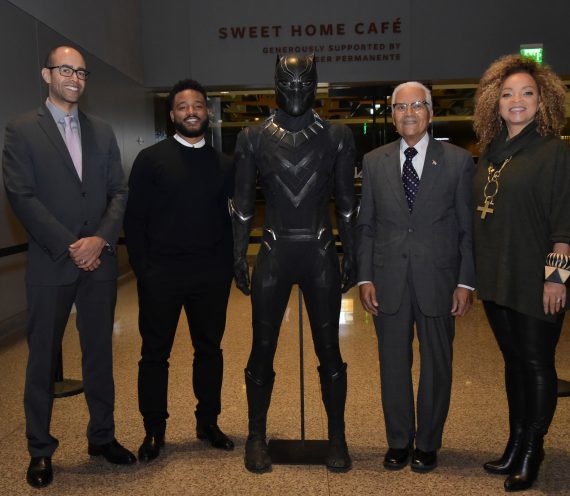
But it was Black Panther (2018) that solidified Coogler’s place in cinematic history. The film was more than a superhero movie; it was a cultural phenomenon. With its Afrofuturist vision, layered world-building, and powerful themes of diaspora, leadership, and heritage, Black Panther shattered box office records and expectations alike. It became the first superhero film to be nominated for Best Picture at the Academy Awards and remains a landmark moment for Black representation on the global stage. Coogler crafted not just a movie, but a movement — one that inspired pride, imagination, and possibility for millions around the world.
Coogler followed up with Black Panther: Wakanda Forever (2022), a film that carried the immense weight of grief, both on-screen and off. In the wake of Chadwick Boseman’s passing, Coogler turned loss into art, crafting a meditation on mourning, resilience, and legacy. The sequel paid tribute to Boseman while deepening the emotional core of Wakanda’s world — expanding the mythology, exploring the complexity of its female leads, and introducing new cultural dimensions through the kingdom of Talokan. It proved that Coogler’s strength as a director lies not just in spectacle, but in his profound understanding of humanity.
And with his latest project, Sinners, starring Michael B. Jordan, Coogler continues to evolve as a storyteller unafraid of bold, genre-bending ideas and proving himself a shrewd Hollywood player behind-the scenes. Released in April 2025, Sinners is Ryan Coogler’s original vampire thriller set in 1930s Jim Crow Mississippi, where twin brothers (both played by Michael B. Jordan) return home to open a juke joint only to confront supernatural threats. The film has achieved rare success for a non-franchise, original IP: strong box office openings, high critical praise, and an “A” CinemaScore—something virtually unheard of for R-rated horror. Equally significant is Coogler’s deal with Warner Bros., which grants him creative control, “first-dollar gross” (a share of box office from the start), and ownership rights reverting to him after 25 years—terms that challenge traditional studio models. The commercial and contractual aspects of Sinners signal a shift and Coogler is showing that with strong creative vision and audience trust, original Black storytelling can not only command big box office bucks, it’s storytellers can also negotiate unprecedented ownership structures.
What makes Coogler’s directing career so important isn’t just his success — it’s his intentionality. He brings community to every story he tells, grounding his characters in real human emotion and social consciousness. His work consistently challenges Hollywood’s narrow frameworks, proving that diverse, authentic stories can resonate universally. In an industry that often sidelines Black voices, Coogler’s rise represents both progress and a promise — that more inclusive storytelling can lead to both critical acclaim and commercial success.
As Coogler continues to expand his creative universe through his production company, Proximity Media, and upcoming projects, his impact extends far beyond the screen. He’s mentoring new filmmakers, amplifying underrepresented voices, and redefining what it means to be a director in the 21st century. Ryan Coogler’s career isn’t just important — it’s transformative, a reminder that film can still be a force for empathy, empowerment, and evolution.
Witten by Christopher R. Ford

Related Posts

Ryan Coogler’s Sinners is often discussed as a genre-blending horror film, a Southern Gothic parable, or a musical myth about the blues.

#RunTheCulture Intro: A Moment Captured at Full Volume When Eddie Murphy: Raw hit theaters in 1987, it didn’t feel like just another stand-up special—it felt like a cultural event. Murphy…

#RunTheCulture Few holiday albums feel as timeless—or as joyful—as A Motown Christmas. Released in 1973 by Motown Records, the compilation brought together the label’s biggest stars to put a soulful…

#RunTheCulture For nearly three decades, Timbaland has been synonymous with innovation. From reshaping hip-hop and R&B in the late ’90s and early 2000s to crafting futuristic pop hits with artists…