







Three Ways to Survive a Burning House: Smoke, Stack, and Sammie in Sinners

#RunTheCulture
Ryan Coogler’s Sinners is often discussed as a genre-blending horror film, a Southern Gothic parable, or a musical myth about the blues. But beneath its supernatural elements lies a far more intimate and unsettling question: what does survival actually mean when the world you inhabit is designed to consume you?
Rather than answering this question directly, Sinners fractures it across three central characters—Smoke, Stack, and Sammie—who emerge from the same history yet embody radically different philosophies of survival and endurance. They are not symbolic abstractions, but lived responses to the same conditions: systemic racism, violence, cultural theft, and the fragile possibility of joy under oppression.
Together, these characters form a philosophical triangle. Each path offers something the others lack, and each reveals the limits—and costs—of the others. Sinners does not ask us to choose between them. It asks us to sit with the reality that no single strategy is sufficient on its own.
There is no easy way out.
The Shared Pressure That Shapes Them
Smoke, Stack, and Sammie are forged by the same environment: the Jim Crow South, a landscape where Black survival is conditional, autonomy is fleeting, and culture is both refuge and target. In this world, music becomes a paradox. It is a source of communal healing and economic possibility, but also a beacon that draws exploitation and violence.
What differentiates the three men is not their trauma, but how they orient themselves toward time.
- Smoke is future-facing.
- Stack is present-facing.
- Sammie is after-facing.
Each believes survival depends on prioritizing one of these temporal directions—and the film demonstrates how each choice reshapes identity, ethics, and fate.
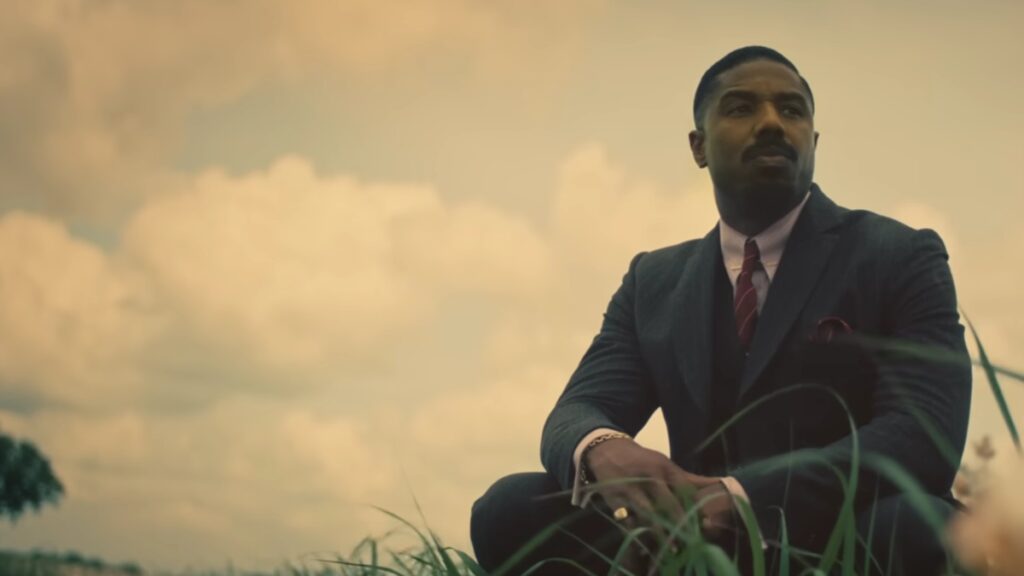
Smoke: Survival as Engineering the Future
Smoke’s philosophy is rooted in pragmatism. He understands the rules of the world as they exist and believes survival comes from learning how to maneuver within them. Where others see danger, Smoke sees leverage. Where others see compromise, he sees strategy.
To Smoke, the juke joint is not just a cultural space—it is infrastructure. It must be financed, defended, regulated, and sustained. His focus is on continuity: how to keep the doors open, the music playing, the people fed, and the violence at bay for as long as possible.
This makes Smoke appear reasonable, even responsible. He is not seduced by power for its own sake. He is seduced by the idea that power might finally provide insulation from historical vulnerability. When confronted with vampirism and its promise of immortality, Smoke hears something familiar: preservation without exhaustion, survival without constant loss.
Yet Sinners exposes the flaw in this logic. Smoke believes survival can be optimized, that systems of control can be bent without reshaping the people inside them. But the film suggests that control always extracts a price, often paid in ways that are invisible at first. Smoke’s tragedy lies in believing that endurance alone is victory, even if it means becoming something less recognizable in the process.
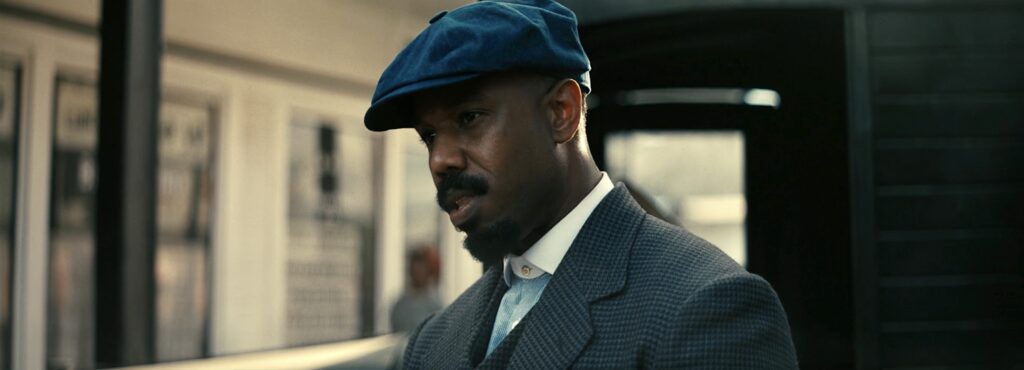
Stack: Survival as Refusal in the Present Moment
Stack stands in direct opposition to Smoke—not because he misunderstands the system, but because he understands it too well. Where Smoke adapts, Stack refuses. Where Smoke negotiates, Stack draws boundaries.
Stack’s philosophy is rooted in self-definition. He believes survival loses its meaning if it requires surrendering identity, history, or moral clarity. The juke joint, to Stack, is not a flexible space—it is sacred ground. It exists as a declaration: this is ours, and it will not be diluted.
This makes Stack the most openly resistant figure in the film. He immediately recognizes the danger in offers that promise safety at the cost of autonomy. Vampirism, to Stack, is not a supernatural temptation but a historical pattern: extraction framed as collaboration, theft disguised as admiration.
But Stack’s refusal comes with consequences the film refuses to soften. His rigidity leaves little room for retreat, adaptation, or survival when violence escalates. In a system designed to crush defiance, refusal alone cannot ensure protection. Stack preserves integrity, but he cannot preserve space.
Sinners does not punish Stack for his resistance—but it does not romanticize it either. His philosophy is righteous, but righteousness does not stop the fire.
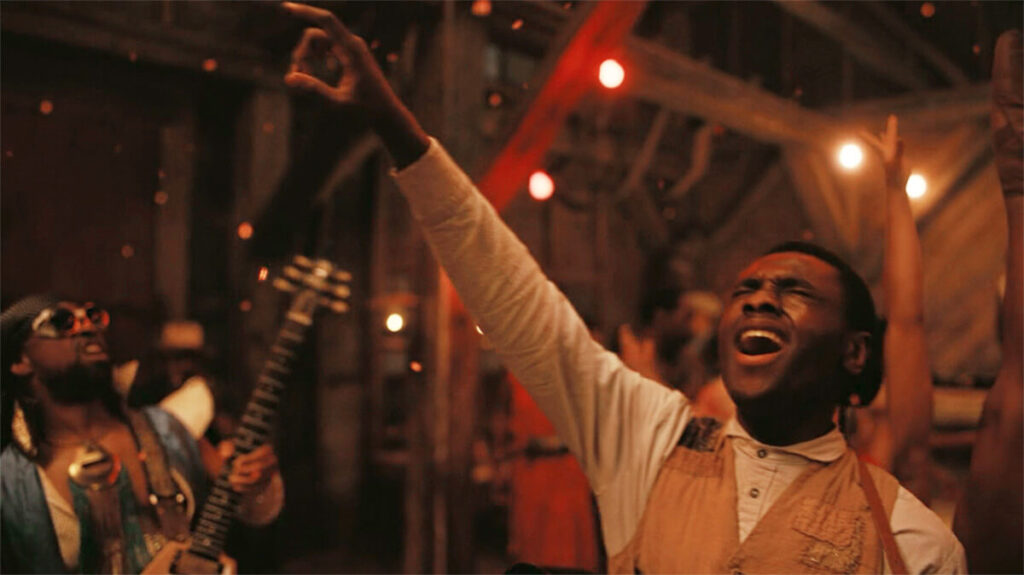
Sammie: Survival Through What Outlasts the Moment
If Smoke represents endurance and Stack represents integrity, Sammie represents legacy.
Sammie exists outside traditional power structures. He is not a leader, a strategist, or a fighter. His relationship to music—and by extension, culture—is fundamentally different. The film never treats Sammie as an owner of his talent. He is a vessel, a transmitter, a living archive through which memory flows. That is why he is the true target of the vampires.
This makes Sammie uniquely vulnerable. He cannot protect the juke joint or resist the violence that consumes it. But it also makes him uniquely durable. Sammie is oriented not toward preserving the present or conquering the future, but toward carrying something forward, even if it emerges transformed.
Sammie’s rejection of vampirism is not framed as moral superiority. Immortality contradicts his purpose. Transmission requires change, adaptation, and impermanence. A song that never evolves becomes a museum piece. Sammie understands—perhaps instinctively—that survival through memory demands loss.
His survival is the quietest, and the most haunting. He lives not because he wins, but because the story needs someone to remember what happened.
The Juke Joint as Philosophical Battleground
The juke joint is where these philosophies collide. It is simultaneously:
- Smoke’s system
- Stack’s sanctuary
- Sammie’s crucible
Each man invests the space with a different meaning, and when violence arrives, those meanings fracture. Smoke tries to contain the threat, Stack tries to destroy it, and Sammie absorbs the aftermath. The destruction of the juke joint is not just narrative tragedy—it is philosophical inevitability. No single approach can protect it alone.
The Broken Guitar: A Visual Synthesis
The broken guitar that opens and closes Sinners encapsulates the film’s argument more clearly than any line of dialogue.
Smoke wants to protect the instrument intact.
Stack would rather destroy it than see it taken.
Sammie carries it broken—and keeps moving.
The damage is real. The loss is irreversible. But the music is not gone.
This is Coogler’s refusal of false resolution. Survival is not clean. Culture does not emerge unscarred. What endures is not perfection, but continuation through the fractures.
Why No One “Wins” in Sinners
Sinners rejects the idea of a single correct philosophy. Smoke’s strategy cannot prevent devastation. Stack’s resistance cannot stop erasure. Sammie’s survival comes with isolation, trauma, and responsibility without protection.
Yet together, they form a composite truth: survival under oppression is not a singular act, but a collective, uneven process. Some people build. Some people resist. Some people remember. History survives because all three roles exist, even when they come into conflict.
Conclusion: The Song Outlives the Singer
Smoke asks how long something can last.
Stack asks what it must never become.
Sammie asks what will remain when it’s gone.
Sinners suggests that systems collapse, spaces burn, and people fall—but culture persists through those willing to carry it forward, even when their hands are shaking. In the end, the film argues that survival is not about defeating the monster, but about refusing to let it have the final word.
The house may burn—but the song escapes the fire.
Written by Christopher R. Ford
@TalentedMrFord

Related Posts
#RunTheCulture Intro: A Moment Captured at Full Volume When Eddie Murphy: Raw hit theaters in 1987, it didn’t feel like just another stand-up special—it felt like a cultural event. Murphy…

#RunTheCulture Few holiday albums feel as timeless—or as joyful—as A Motown Christmas. Released in 1973 by Motown Records, the compilation brought together the label’s biggest stars to put a soulful…

#RunTheCulture For nearly three decades, Timbaland has been synonymous with innovation. From reshaping hip-hop and R&B in the late ’90s and early 2000s to crafting futuristic pop hits with artists…

There are certain movies that don’t just entertain you—they represent you. “Coming to America”, directed by John Landis and powered by Eddie Murphy at his comedic peak, CtA is one…